Devyn Davis
Staff Writer
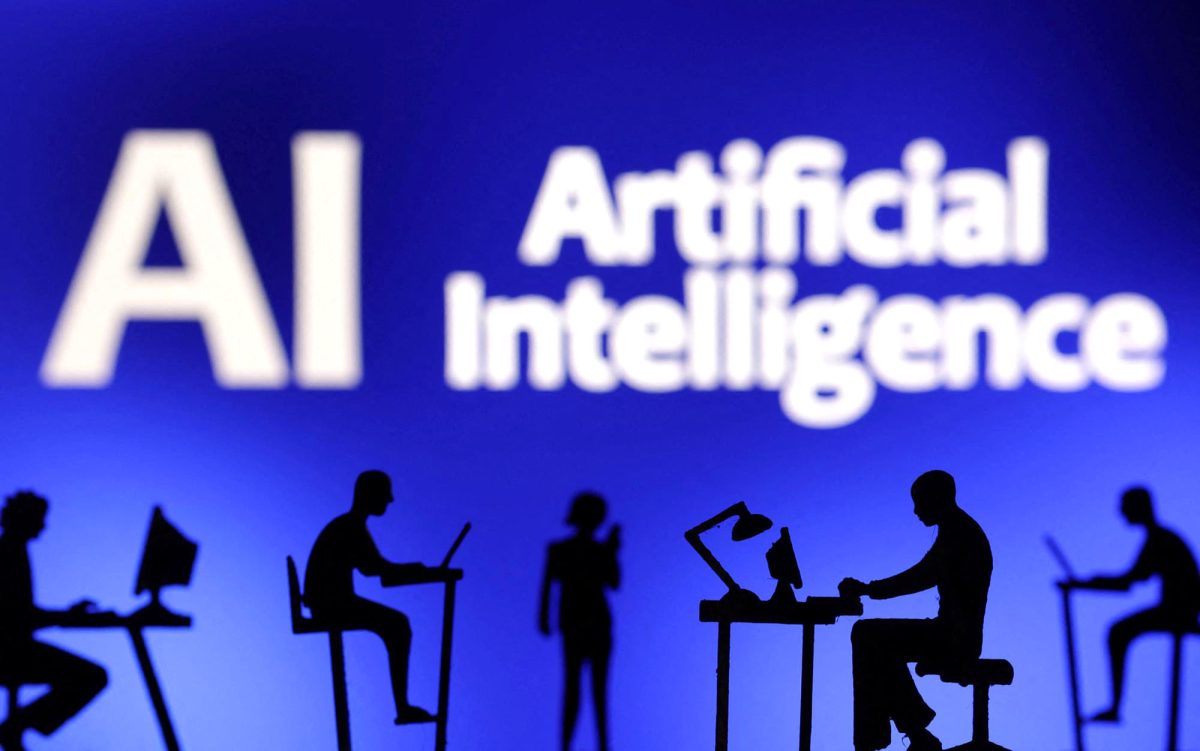
When students turn in their assignments these days, there’s a silent collaboration with artificial intelligence tools behind many of them.
Whether it’s ChatGPT or Grammarly, AI tools integrate their way into classrooms, causing a debate on whether it is beneficial or harmful for students.
As artificial intelligence tools like ChatGPT and Grammarly become part of student’s daily lives, schools across the country struggle with whether or not to use AI. Some say the technology helps them learn faster, study efficiently, and express ideas clearly. Others worry that it dulls critical thinking and creativity. While opinions vary, one fact is clear: for today’s generation, AI is part of the learning experience.
“Artificial intelligence could be used as a tool to help students and myself organize thoughts, organize research more efficiently,” said Steven Entenman, a history teacher who researched AI during college. “It’s for helping you get better, not a tool to produce things. That’s really where the research is going right now- how do we change our assignments so that AI is less of a producer but more of a tool.”
Entenman estimates that nearly all of his students have used AI at some point during the school year. The College Board recently released a study showing that the percentage of students who use AI rose from 79 percent to 84 percent between January and May 2025.
“At some point in time in the year, I feel like every kid uses AI,” he said. “And that’s sort of to be expected.”
Instead of banning it, Entenman encourages students to use AI responsibly as a starting point rather than a shortcut. For many students, that’s exactly how AI is used on their assignments.
“I use AI pretty much everyday,” said junior Phalith Moza. “I just use it to plan stuff out. I have never used it to write my essays or cheat on tests.”
To Entenman, that’s exactly how AI should be used.
“AI does have its uses in the classroom,” he said. “We’ve just got to look past this fear of artificial intelligence.”
When asked if he worries about AI taking over teaching, Entenman expressed little concern.
“There’s certain jobs like healthcare, teaching, and coaching where that face-to-face interaction is just as, if not more, important than the task at hand. AI is not in tune with the emotions and thoughts of people. It’s a replication device. It just replicates patterns and finds patterns faster than we could ever think of it.”
The debate around AI in classrooms is still ongoing as schools work to balance academic integrity with innovation. Although, it is clear that AI is no longer a futuristic idea, but now a part of our classrooms.