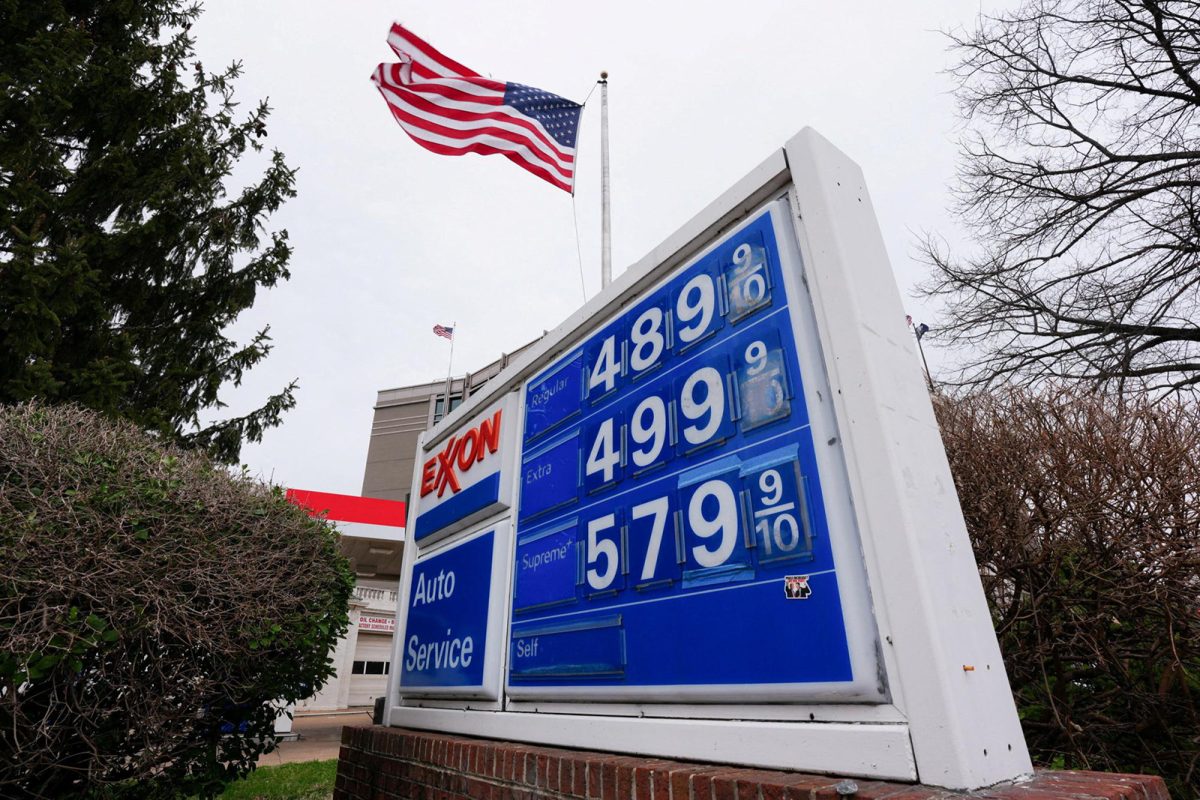
Gas prices rose over 52 percent since the start of the United States’ conflict with Iran in February, according to data gathered from the American Automobile Association on May 8. The month of March alone saw a 21 percent hike in prices, the sharpest monthly increase in six decades according to the Associated Press.
These increases in price per gallon cost consumers across the United States. Spring-Ford students who buy their own gasoline, especially those who do not have a stable job yet, particularly feel the effects of escalating prices.
“I have a job, but my base pay is only $7.25 and tips depend on the night, filling up my tank takes like thirty,” junior Josie Magee said.
According to AAA, gasoline was sold, on average, at $2.98 a gallon on Feb. 28 – the day the U.S. conflict with Iran began – compared to the $4.54 a gallon cost on May 8, which accounts for a $1.56 per gallon increase. The current per gallon price is $1.39 more than it was at this point last year, when gas prices averaged $3.15 per gallon.
The average price for a gallon of gasoline in Pennsylvania stood at $4.69 on May 8, more than $1.37 more per gallon that it was last year when it was $3.31.
Students with pricey extracurriculars especially struggle with rising prices, as frequent driving to and from destinations is common.
“I have to pay more because I constantly travel back and forth to Reading for Reading Buccaneers because I’m in color guard,” Magee said. “And that’s on top of how much I’m paying to be in (color guard).”
For families with teens driving, these rate hikes take a large toll as well.
“My parents are always complaining about the prices especially since they’ve been going up,” junior Jessica Hin said. “For me it costs like $45 to fill it up.”
Finding a job, especially one that pays well enough to support gas prices, is difficult for high school students involved in sports or activities that may not align with a work schedule.
Not only does the rise in gas prices affect Spring-Ford students, but also teachers who must drive to school every day. Particularly so for the many faculty who live beyond the district’s bounds.
“My electric car is the best investment I’ve made in the last two years,” history teacher Steve Entenman said. “Without my car I would definitely be upset about the gas prices.”
A non-gas powered vehicle removes the stress of paying the high prices to fill the gas tank.
Overall, the rising gas prices negatively impacted many individuals in the Spring-Ford community, and many are simply unable to comfortably afford the rising prices – especially if they continue to skyrocket over time.
For teens, these prices are especially upsetting as many struggle to find a job, or even have a part-time career that does not pay enough to support them. Even for students whose parents do fund their gas, it is still a struggle that has been on the rise.